
How Money Works in a Country’s Economic System: A Clear and Grounded Guide
Money is often seen as something simple—notes in your wallet or numbers in a bank account. But beneath that simplicity lies a carefully structured system that keeps an entire country’s economy functioning. Understanding how money works is not just for economists; it gives clarity about everyday realities like prices, jobs, savings, and growth.
Let us walk through this system in a clear and practical way.
The Purpose of Money
At its core, money exists to make economic life smoother and more organized. It serves three essential roles.
First, it acts as a medium of exchange, allowing people to buy and sell without the complications of barter. Instead of trading goods directly, money becomes the common bridge between needs.
Second, it works as a unit of account, meaning it gives a standard way to measure value. Prices, wages, and profits are all expressed in money, making comparison possible.
Third, money functions as a store of value. It allows people to save today and spend later, carrying purchasing power across time.
Who Controls the System
In any country, the responsibility of managing money rests largely with a central authority. In India, this role is handled by the Reserve Bank of India (RBI).
The central bank does not just print currency. It regulates how much money exists in the system, sets interest rates, and ensures financial stability.
Alongside it are commercial banks. These are the institutions people interact with daily. They accept deposits, provide loans, and play a major role in circulating money throughout the economy.
How Money is Created
A common misunderstanding is that money only comes from printed notes. In reality, most money is created digitally through banking activity.
When the central bank issues currency, it introduces physical money into the system. However, the larger portion of money creation happens when banks give loans.
For example, when a bank approves a loan, it does not hand out pre-existing money. Instead, it creates new money by adding a balance to the borrower’s account. This process, known as credit creation, expands the money supply.
The Flow of Money
Money does not sit still. It constantly moves through different parts of the economy.
Households earn income and spend on goods and services. Businesses use that money to pay wages, invest in production, and expand operations. Governments collect taxes and spend on infrastructure and welfare. Banks connect savers with borrowers.
This continuous movement is known as the circular flow of income. It keeps economic activity alive and functioning.
The Importance of Balance
The amount of money in the system must be carefully controlled.
If there is too much money, inflation rises. Prices increase because more money is chasing the same amount of goods. On the other hand, if there is too little money, economic activity slows down. Businesses struggle, and unemployment may rise.
The central bank maintains this balance through tools like interest rates and market operations.
Interest Rates as a Control Tool
Interest rates influence how people and businesses behave.
When interest rates are low, borrowing becomes easier. People take loans, businesses invest more, and spending increases. This stimulates growth.
When interest rates are high, borrowing becomes expensive. People save more, spend less, and inflation tends to slow down.
In this way, interest rates act like a steering mechanism for the economy.
Inflation and Its Impact
Inflation is the gradual increase in prices over time. It directly affects the value of money.
When inflation is high, the same amount of money buys fewer goods. When inflation is stable and moderate, the economy remains predictable and manageable.
Maintaining this stability is one of the central bank’s primary goals.
The Role of Trust
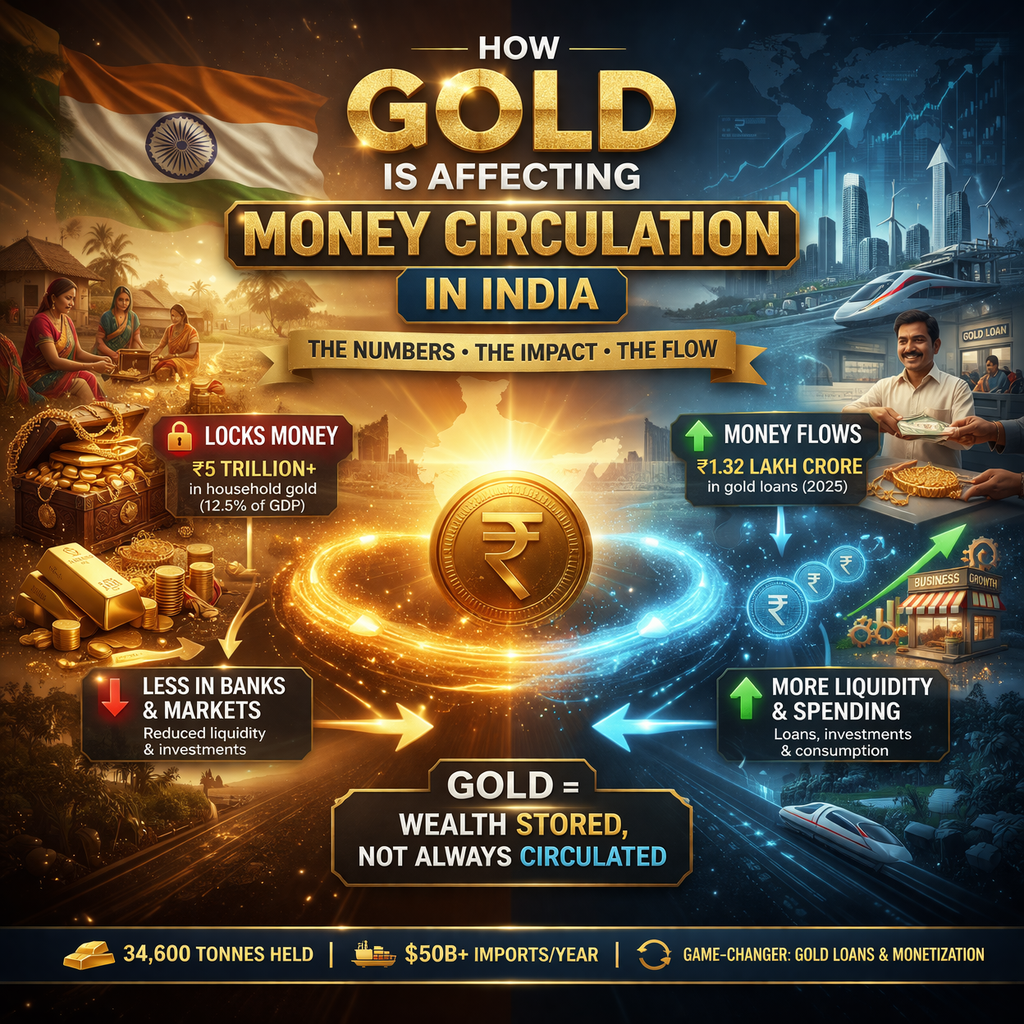
Modern economies operate on fiat money—money that is not backed by physical commodities like gold. Its value depends on trust.
People accept money because they trust the system behind it: the government, institutions, and overall economic strength. If this trust weakens, the value of money can decline rapidly.
The Bigger Picture
When seen as a whole, the economic system operates as a cycle.
The central bank regulates supply. Banks create money through lending. People and businesses spend and invest. Governments guide through policy. And money continues to circulate, supporting growth and stability.
A simple way to understand this is to think of money as blood in the body. The economy is the body, banks act like the heart, and the central bank ensures the flow remains balanced. When the flow is healthy, the system thrives.
Closing Thought
Money is not just a tool for transactions. It is a carefully managed system that reflects the health, discipline, and trust within a country. Understanding it brings a deeper awareness of how everyday financial decisions connect to the larger economic world.
When you see money this way, it stops being just something you spend—and becomes something you understand.

















Write a comment ...